
Comparing 22kW Residential DC EV Chargers for V2H Applications
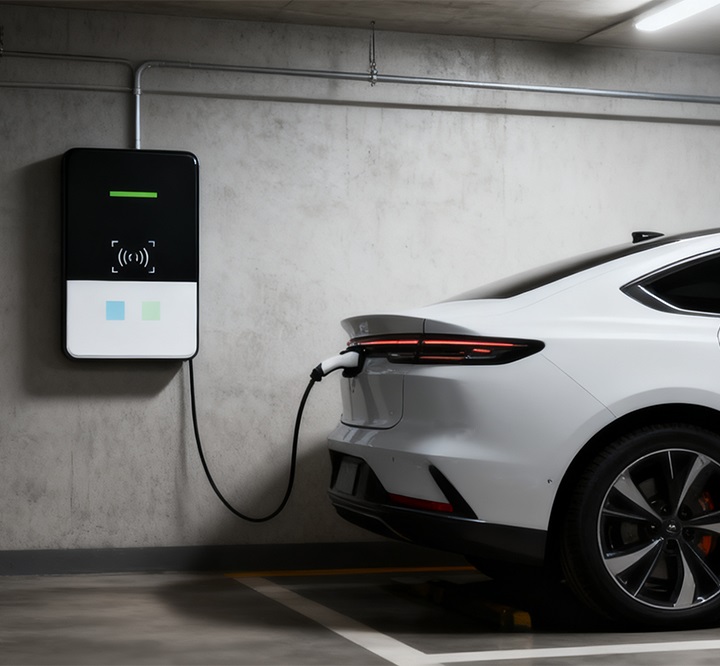
A 22kW residential DC EV charger for V2H applications combines faster charging, bidirectional power transfer, and home energy management functions in one system. Compared with standard AC chargers, it can provide up to 22kW DC output, improve charging efficiency to around 95–98%, and support household backup power from EV batteries. Selection should focus on power conversion efficiency, vehicle compatibility, communication standards, safety functions, and installation requirements.
Residential EV charging is moving from simple battery charging toward two-way energy exchange. A 22kW DC charger can send electricity from the grid to an EV battery and also return stored energy to a home during high electricity price periods or power interruptions. In a typical V2H setup, a 60–100kWh EV battery can provide several hours of household electricity depending on home consumption.
A household using 10kWh of electricity per day could use a 70kWh EV battery as a temporary energy source for approximately 5–7 days under reduced consumption conditions.
The main difference between AC and DC residential chargers is where power conversion takes place. A 7kW AC charger depends on the vehicle’s onboard charger, while a 22kW DC charger includes its own power conversion equipment. This allows more precise control over charging and discharging processes.
| Item | AC Home Charger | 22kW DC V2H Charger |
|---|---|---|
| Power output | Usually 3.7–22kW AC | Up to 22kW DC |
| Energy direction | Mainly grid to vehicle | Grid to vehicle and vehicle to home |
| Conversion unit | Inside EV | Inside charger |
| Efficiency range | About 90–95% | About 94–98% |
| Home backup support | Limited | Available with compatible systems |
The efficiency difference becomes important during frequent V2H operation. A charger working at 95% efficiency loses about 500Wh when transferring 10kWh of energy, while a 98% efficient system loses about 200Wh. Over 365 daily cycles, the annual difference can exceed 100kWh.
Many residential users compare 22kW chargers based only on charging speed, but V2H requires additional functions. A charger must communicate with the vehicle battery management system, monitor grid conditions, and control power flow safely.
A residential V2H charger is not only a charging device; it also works as a power management unit between the EV battery, home electrical system, and utility network.
Vehicle compatibility is another important factor. Different EV brands use different charging communication methods. Earlier V2H systems often relied on CHAdeMO connections, while newer platforms are moving toward ISO 15118 communication standards introduced for advanced smart charging.
Since 2020, several European and North American automotive manufacturers have increased investment in bidirectional charging technology. By 2025, ISO 15118-based communication had become an important development direction because it supports automated charging authorization and more flexible energy management.
A bidirectional EV charger for V2G also shares many technologies with V2H systems because both require two-way electricity exchange. The main difference is that V2H focuses on supplying a home, while V2G connects EV batteries with the wider electricity grid.
| Function | V2H | V2G |
|---|---|---|
| Main purpose | Home electricity supply | Grid support |
| Main user | Homeowner | Utility and energy operators |
| Control level | Household energy management | Grid-level coordination |
| Typical power range | 5–22kW | Several kW to higher aggregated capacity |
Thermal performance affects long-term charger reliability. A 22kW DC charger contains power modules, switching components, and cooling systems that generate heat during operation. Continuous discharge from an EV battery requires stable temperature control to maintain efficiency.
For example, supplying 15kW household power for 6 hours transfers approximately 90kWh of electricity. If the charger repeatedly operates near maximum output, cooling design and component quality influence service life.
Residential installation requirements vary by region. Many European homes already use three-phase electrical connections, making 22kW charging easier to install. In some regions, residential electrical systems may require upgrades before supporting continuous 22kW operation.
| Installation Aspect | Typical Requirement |
|---|---|
| Power supply | Three-phase AC in many markets |
| Protection | Ground fault protection, insulation monitoring |
| Communication | Wi-Fi, Ethernet, cellular connection |
| Management | Smart charging software |
| Location | Garage, outdoor wall, or dedicated charging area |
Energy pricing also affects the usefulness of V2H technology. Time-of-use electricity plans allow EV owners to charge when prices are lower and use stored energy during expensive periods.
Assuming electricity prices are $0.12/kWh overnight and $0.35/kWh during peak hours, shifting 20kWh per day could create a theoretical difference of $4.60 per cycle before considering battery aging and system losses. Over 250 charging days, the annual price difference could reach more than $1,000.
Battery condition must also be considered. Additional charging and discharging cycles increase battery energy throughput. Modern EV batteries using lithium iron phosphate (LFP) chemistry generally provide longer cycle life compared with many nickel-based batteries, making them suitable for repeated energy exchange.
A comparison of 22kW residential DC chargers should include several technical measurements rather than only rated output.
| Evaluation Area | Recommended Check |
|---|---|
| Output power | Stable 22kW operation |
| Efficiency | Above 95% preferred |
| Communication | ISO 15118 support |
| Vehicle support | Compatible EV models |
| Protection | Grid safety functions |
| Software | Remote control and scheduling |
Smart energy management software has become a standard feature in many advanced systems. These platforms can schedule charging according to electricity prices, solar production, and household consumption patterns.
For homes with rooftop solar systems, a 22kW bidirectional charger can help store excess solar electricity inside an EV battery during the day and provide electricity in the evening. A 10kW solar installation combined with a 70kWh EV battery can store several days of household energy depending on daily consumption.
Research projects from 2021 to 2025 have shown that coordinated EV charging can support local electricity networks by reducing peak demand periods. Some studies reported peak load reductions of approximately 10–40% when smart charging systems were widely adopted.
The choice between different 22kW residential DC EV chargers depends on the intended use. A homeowner mainly seeking faster charging may prioritize output power, while a user interested in V2H should pay more attention to bidirectional efficiency, software control, battery compatibility, and safety certification.
A well-designed 22kW DC V2H system should provide stable charging, reliable home power support, and flexible communication with future energy systems.
As EV ownership continues increasing in Europe, North America, and other developed markets, residential DC chargers are expected to become part of home energy systems rather than standalone charging equipment. The combination of EV batteries, renewable energy, and smart electricity management will continue shaping the next generation of residential power solutions.